


How to Find the Best Lift Kits for Trucks in Texas

When it comes to finding the best lift kit for your truck, it's all about what you want out of it. If you're driving your F-150 daily on the highway, your needs are going to be really different from those of someone building a truck for tearing up off-road trails or working on a ranch.
So, let's start with the basics: what you want your truck to be able to do, and how much lift you need to get there, as well as what tires and wheels you're after. The right lift kit should give you the clearance you're looking for without affecting the handling, ride quality, or safety of your truck.
Key Takeaways:
If you just want a bit of extra tire clearance and a more aggressive stance for your daily driver, a leveling kit or smaller lift might be just what you're after.
If you're wondering how to improve off-road capability on a truck that often drives off the beaten path, a suspension lift is a good way to go, but only if it's properly matched to your truck.
A body lift is a different animal altogether: it raises the body, but doesn't do anything for suspension travel or the chassis itself.
You'll need to think about things like larger tires, wheel offset, suspension geometry, and shock quality.
Make sure to get your lift kit installed by a pro, like our team at Evolution Motoring, who can help protect your truck's handling, alignment, and suspension system and carry out an installation that meets factory standards.

1. Decide What You Want From Your Lift
Instead of starting by asking how high you can lift your truck, ask yourself why you're lifting it in the first place.
For instance, if you're customizing your truck for a bold new look and daily driving, lift kits that provide 1.5 to 2 inches of additional lift might be all you need. But if you're building a truck that will see some serious off-road action, you'll want a suspension lift that changes out the suspension components to give you more clearance and let you run bigger tires. That means better performance on uneven ground and improved off-road capability.
Just keep in mind that a body lift isn't going to give you the same kind of off-road performance as a full suspension lift. And regardless of what you go for, your lift kit should be durable enough to handle Texas' extreme driving conditions.
2. Choose a Sensible Lift Height
Lift kits come in all shapes and sizes, from mild one-to-two-inch options to larger seven-to-eight-inch setups.
For most daily driving, you don't need to go too out there with the lift. A smaller lift or leveling kit can give your truck some extra clearance without pushing it too far from stock, prioritizing comfort and minimal wear. But if you're looking to build around bigger tires or off-road use, you'll want a taller lift.
Just be aware that the higher you go, the more complicated the suspension geometry gets. Depending on your truck and kit, you may need to add components like steering knuckles, crossmembers, differential drop or relocation brackets, brake-line brackets, new shocks, and more.
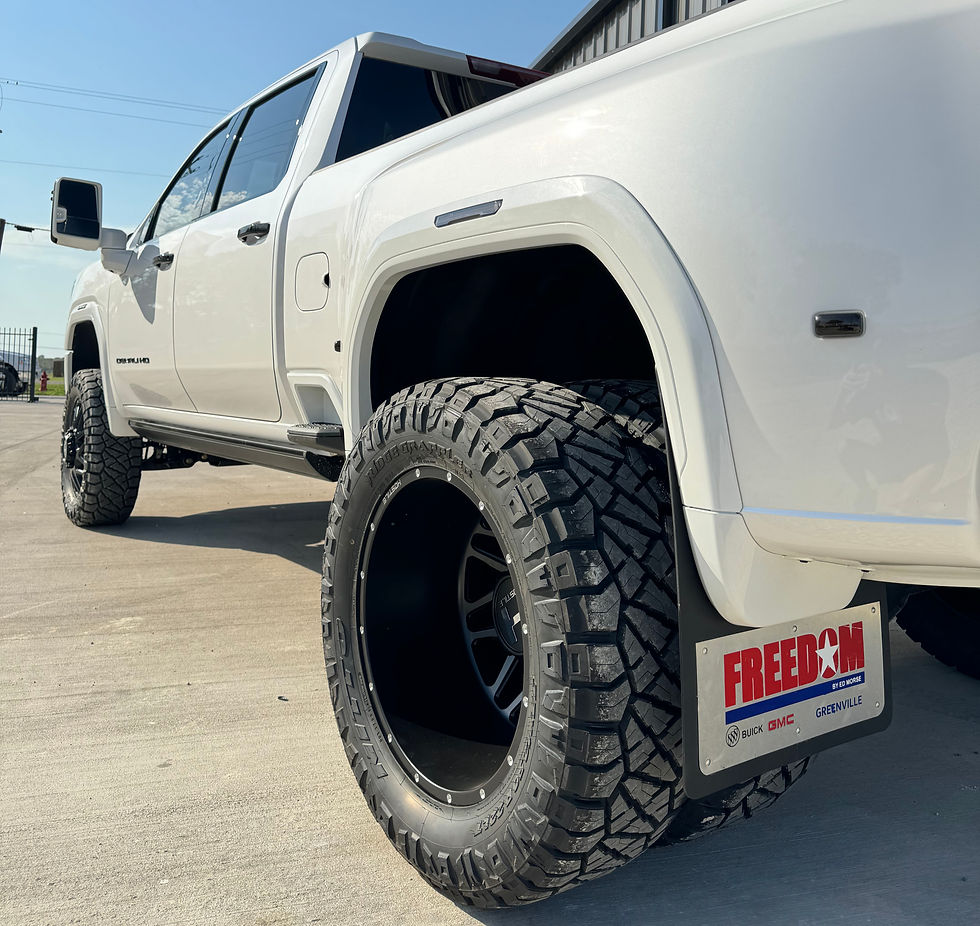
3. Match the Lift to Your Tires and Wheels
We don't recommend choosing your lift kit, tires, and wheels separately. The right height and type of lift will depend on your exact truck, as well as the tires and wheels you have (or want to replace). And if you get it wrong, like choosing wheels that are too big or the wrong offset, you can end up with rubbing or poor clearance.
Before you buy a kit, decide on the tire size you want to run and then check the manufacturer's approved wheels and tires for that exact application. Professional advice based on your vehicle-specific fitment can save you from premature wear and buying parts twice.
4. Don't Ignore Suspension Geometry
A quality lift kit doesn't simply prioritize making the truck taller. On independent front suspension trucks, excessive CV axle angles can wear out the suspension components. That means if you're going for a higher lift, you may need differential relocation or drop components to restore better operating angles. Steering geometry and alignment need to be taken into account, too.
There's also the matter of shocks. If you're regularly driving on uneven roads or taking your truck on off-road adventures, you'll want to make sure they're up to the task, since the quality of shock absorbers can significantly affect both comfort and ride performance. Look for durable shocks with good damping, and consider adjustable options if you want to be able to tweak the suspension to your liking.
5. Consider Ride Quality and Fuel Efficiency
When you start making big changes to your vehicle, you still want good traction and comfort when you're on the road.
A lifted truck sits higher, and that can actually make it harder. And when you install bigger tires and wheels, it can affect everything from your acceleration and braking to even your fuel efficiency. Plus, off-road tyres are bound to make more noise on the road than the ones you've got now.
But that doesn't mean a lifted truck has to be a bumpy ride from hell. It just means you need to think about how everything fits together: suspension, shocks, tyres, wheels, and lift height.
If your truck spends most of its time on the road, and you only take it off-road at the weekends, you need to tell your mechanic that from the start. The best lift kits are chosen with exactly that in mind.
6. Check Texas Height Rules
Texas gives you a lot of freedom to customise your truck, but there are still some pretty strict rules you need to follow, not just for lift kits, but for things like wheel modifications, too.
The Texas Transportation Code says your truck can't be more than 14 feet tall, including the load, and headlamps need to be between 24 and 54 inches off the ground. The maximum bumper heights for lifted vehicles in Texas are regulated to make sure you comply with safety laws.
That means the measurements you settle on are key, especially if you're considering a really tall lift. Your mechanic should be looking at the whole vehicle, not just how tall the lift kit is.
7. Budget for More Than the Kit
You can get a lift kit that's pretty cheap, but then you've got to think about the rest of the job, too. That includes getting the lift kit installed, and any extra parts you might need.
For example, a 6-inch lift kit for a Ford F-150 can cost over $2,000, depending on the configuration you go with. And that doesn't even include the installation costs. That's why you need to budget for the whole job, not just the lift kit itself.
Also, think about how this might affect your warranty. Aftermarket parts don't automatically void your manufacturer's warranty, but if something goes wrong, it can make things tricky. The FTC has lots of helpful advice on how to navigate this.
8. Choose a Shop That Can Handle the Whole Build
Professional lift kit installation gives technicians the chance to check the important things, like fitment, suspension geometry, alignment, tire clearance, and handling, rather than simply installing the lift and sending the truck out the door.
Our team at Evolution Motoring brings more than 35 years of combined automotive expertise to every build. Our UTI-trained technicians work with professional-grade equipment, and we're an XPEL Premier Dealer, too.
More importantly, we're a one-stop shop. If your customization plan goes beyond lift kit installation, we can also help with wheels, tires, lighting, paint protection, performance upgrades, and other precision work and accessories.
If you're planning a lift in Caddo Mills, Greenville, Royse City, Rockwall, or elsewhere in Northeast Texas, we're happy to answer your questions before you order your kit. Contact us here.

FAQs
Q: What type of lift kit is best for daily driving?
For many daily driving trucks in Texas, a leveling kit or moderate suspension lift is enough to achieve extra tire clearance and a more aggressive appearance without making the vehicle unnecessarily tall. The right choice for you depends on your truck and the tires you want to install.
Q: Does a suspension lift improve ground clearance?
Yes, a properly designed suspension lift can increase ground clearance and create room for larger tires. A body lift raises the body from the frame but doesn't increase suspension clearance in the same way.
Q: Can a lift kit affect handling?
Yes, changing ride height, suspension geometry, wheels, and tires can all affect the handling of your vehicle. That's why correct installation and alignment are particularly important after suspension modifications.
Q: Can you fit lift kits on Jeeps and SUVs?
Yes, our lift kits are available for many truck, Jeep, and SUV applications. The correct lift and installation requirements depend on the suspension design, intended tire size, and your driving style. We can help you choose the right kit based on these factors.
Q: Where can I get a lift kit installed in Northeast Texas?
Evolution Motoring provides lift kit installation and automotive customization services from our shop in Caddo Mills, TX. With 35+ years of combined expertise and 700+ completed vehicle projects, we can help you choose and install the right lift kit for your truck and plan any wheels, tires, lighting, or performance upgrades at the same time.


Comments